Vinod Khosla
Also known as Khosla Ventures
Vinod Khosla is an entrepreneur and investor known for co-founding Sun Microsystems and founding Khosla Ventures. His background includes engineering study in India, biomedical engineering at Carnegie Mellon and an MBA at Stanford. He also worked on the early development of Juniper Networks. Khosla Ventures invested in OpenAI in 2019. Khosla’s public writing discusses how technology could change health care, work, energy and the cost of services. His 2024 Plausible Tomorrows presentation and AI Dystopia or Utopia essay set out an optimistic view of AI’s possible economic effects. These are forecasts and arguments about choices society may face. His investing and sustained public work make that position visible in AI debate.
Timeline
-
Education and early career
Combining engineering and business
Khosla studied electrical engineering at IIT Delhi, biomedical engineering at Carnegie Mellon and business at Stanford. He then worked on technology companies, including Daisy Systems. This brought technical and business training together before his best-known role in building a computing company.
-
Sun Microsystems years
Building a computing company
Khosla co-founded Sun Microsystems and served as its founding chief executive. The company became a central part of his career in computing. His experience involved the work of bringing technical systems into businesses, a subject that continued in his later investments and public arguments.
-
Venture investing years
Founding Khosla Ventures
Khosla founded Khosla Ventures and invested across technology fields. His public work examined how technical change could alter services and industries, including health care. The investment role gave him a continuing connection with founders working to turn technical ideas into practical businesses.
-
May 2024
Describing plausible futures
In Plausible Tomorrows, Khosla presented possible changes across work, health and other parts of the economy. He argued that technical advances could make services more widely available. The presentation offered a set of future possibilities, with timing and scale dependent on development and adoption.
-
September 2024 onward
Discussing AI and the economy
In AI Dystopia or Utopia, Khosla set out his view of AI’s possible effects on wealth, expertise and work. He argued for a future with broadly available services. The essay made his optimism explicit and gave readers a public account of the assumptions behind it.
Sources and credits
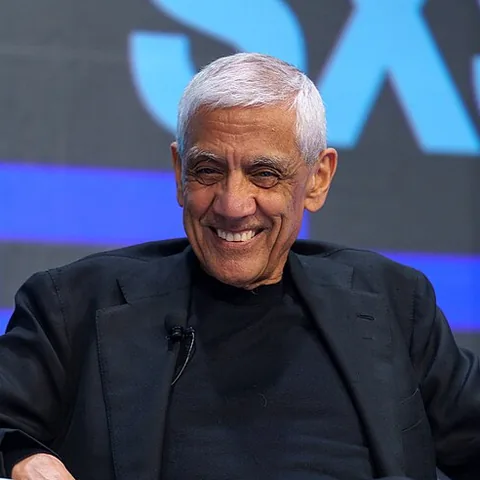
Photo: Jay Dixit / Wikimedia Commons. License: CC BY 4.0 (https://creativecommons.org/licenses/by/4.0/). Source: commons.wikimedia.org. Cropped to a square and resized. Ask us to remove or replace this photo.
