Leslie Valiant
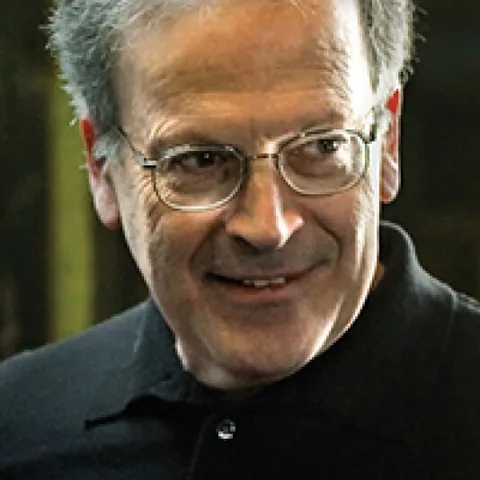
Leslie Valiant studies the capabilities and limits of computation. He completed his doctorate at Warwick in 1974 and joined Harvard in 1982. His research made major contributions to counting complexity, parallel computing and the theory of learning. In 1984, he introduced a formal framework for asking which concepts a computer can learn efficiently from examples under stated conditions. That work helped establish computational learning theory. He also wrote Circuits of the Mind and Probably Approximately Correct, extending the discussion to cognition and adaptation. Valiant received the 2010 ACM Turing Award, announced in 2011. He is the T. Jefferson Coolidge Professor of Computer Science and Applied Mathematics at Harvard.
- Now at
- Harvard University
- Works
- 227
- Citations
- 30,129
- h-index
- 57
Publication numbers from OpenAlex, as of 14 October 2026.
Timeline
-
1967–1974
Building a mathematical foundation
Completed his Warwick doctorate after study at Cambridge and Imperial College London.
-
1979
Studying the difficulty of counting
Published major work on the computational complexity of counting problems.
-
1984
Giving learning a formal framework
Introduced a formal theory of learning efficiently from examples.
-
1990
Providing a model for parallel computation
Published a model that connects parallel algorithms with communication and coordination costs.
-
2010–2013
Receiving recognition and writing for wider readers
Received the 2010 Turing Award, announced in 2011, and published Probably Approximately Correct in 2013.
Sources and credits
Photo: Harvard SEAS faculty profile. License: Not stated by source. Source: seas.harvard.edu. Cropped to a square and resized. Ask us to remove or replace this photo.