Thomas Huang
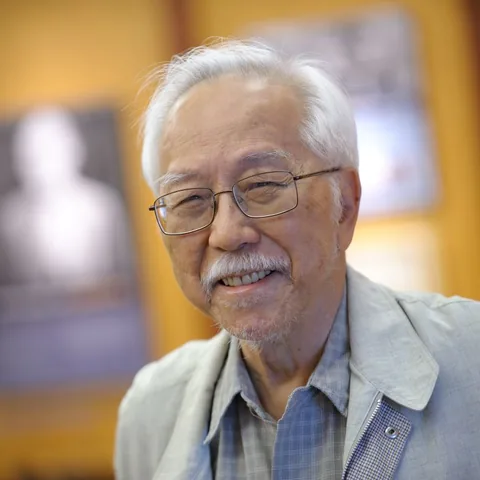
Thomas Huang worked across image processing, pattern recognition, computer vision and human-computer interaction. He earned his MIT doctorate in 1963, moved to Purdue in 1973 and joined Illinois in 1980. In 1989, he formed the Image Formation and Processing Group at the new Beckman Institute. His contributions included image compression and methods relating motion in three dimensions to image measurements. He received the 2011 Azriel Rosenfeld Lifetime Achievement Award. After retiring from teaching in 2014, he continued deep-learning research. He died on April 25, 2020.
- Works
- 1,383
- Citations
- 109,074
- h-index
- 141
Publication numbers from OpenAlex, as of 14 October 2026.
Timeline
-
1963–1980
An academic research career
Huang earned his doctor of science at MIT in 1963 and remained there as a faculty member. He moved to Purdue in 1973 and Illinois in 1980. His work included image compression and image analysis.
-
1989
Building a visual research group
When the Beckman Institute opened in 1989, Huang moved his laboratory there and formed the Image Formation and Processing Group. His contributions include vision, pattern recognition and methods relating three-dimensional movement to two-dimensional images.
-
2011
Computer vision recognition
Huang received the 2011 Azriel Rosenfeld Lifetime Achievement Award. This recognizes his computer vision career. His research also covered signal processing and human-computer interaction.
-
2014–2020
Later work on learning
Huang retired from teaching in 2014 and continued research. He focused on deep-learning methods for identifying and categorizing images without human labels. He died on April 25, 2020; his continued research and teaching form part of his legacy.
Sources and credits
Photo: beckman.illinois.edu; creator not stated. License: Not stated by source. Source: beckman.illinois.edu. Cropped to a square and resized. Ask us to remove or replace this photo.