Shaoqing Ren
Also known as 任少卿, Ren Shaoqing
Shaoqing Ren is a computer-vision researcher whose residual learning helped make deep image networks easier to train. His Faster R-CNN work made region proposals nearly cost-free. He earned a bachelor’s degree at USTC and a joint PhD with Microsoft Research Asia, co-founded autonomous-driving startup Momenta, and joined NIO to lead driving work. His residual-learning work received the 2023 Future Science Prize; Faster R-CNN and Deep Residual Learning later received test-of-time awards. As of October 2026, he is an endowed chair professor in charge of USTC’s Artificial General Intelligence Institute, remains head of NIO’s Smart Driving department, and is starting a physical-AI and embodied-intelligence business with NIO as a strategic shareholder.
- Now at
- NIO and University of Science and Technology of China
- Works
- 19
- Citations
- 334,634
- h-index
- 13
Publication numbers from OpenAlex, as of 14 October 2026.
Timeline
-
2011–2016
A joint doctorate
He earned a bachelor’s degree at the University of Science and Technology of China (USTC) in 2011 and completed a PhD through a joint USTC and Microsoft Research Asia program in 2016.
-
2015
Learning to propose regions
With Kaiming He, Ross Girshick, and Jian Sun, he coauthored Faster R-CNN. The paper introduced a Region Proposal Network that shares convolutional features with the detection network to generate nearly cost-free object proposals.
-
2016
Training deeper networks
With Kaiming He, Xiangyu Zhang, and Jian Sun, he coauthored Deep Residual Learning for Image Recognition. Its residual framework made substantially deeper networks easier to train by learning functions relative to each layer’s input.
-
2016–2020
Building an autonomous-driving startup
He co-founded Momenta, an autonomous-driving software startup, and worked there from 2016 to 2020. It aimed to use AI to improve driving safety and efficiency.
-
Since 2020
Taking perception onto the road
He joined NIO in 2020 to lead autonomous-driving work. He announced 10,000 NOP+ experience slots, with sessions available at nearly 400 stores.
-
2023–2026
Recognition across a decade
He received the 2023 Future Science Prize in Mathematics and Computer Science for fundamental contributions to AI through deep residual learning. Faster R-CNN received NeurIPS’s 2025 Test of Time Award, and Deep Residual Learning received the 2026 Longuet-Higgins Prize. A September 2026 preprint, MM-Future, models multiple scene-action possibilities for autonomous driving.
-
As of October 2026
Leading in physical AI
He is an endowed chair professor in charge of USTC’s Artificial General Intelligence Institute. He is starting a physical-AI and embodied-intelligence business, with NIO as a strategic shareholder, while remaining head of NIO’s Smart Driving department.
Sources and credits
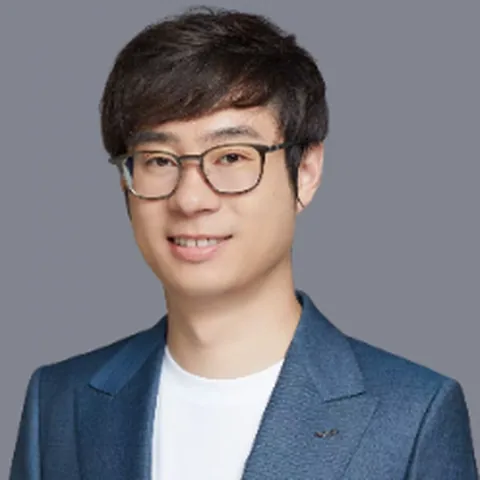
Photo: faculty.ustc.edu.cn; 中国科学技术大学 Shaoqing Ren--Home-- Computer Vision; creator not stated. License: Not stated by source. Source: faculty.ustc.edu.cn. Cropped to a square and resized. Ask us to remove or replace this photo.
- 2023 The Mathematics and Computer Science Prize Laureates — Shaoqing Ren
- Faster R-CNN: Towards Real-Time Object Detection with Region Proposal Networks
- Deep Residual Learning for Image Recognition
- Shaoqing Ren
- What's New with NIO in March?
- Announcing the Test of Time Paper Award for NeurIPS 2025
- Pattern Analysis and Machine Intelligence Awards
- MM-Future: Multi-Mode Joint World-Action Modeling for Autonomous Driving
- NIO (NIO) Q2 2026 Earnings Call Transcript