Richard E. Fikes
Richard E. Fikes worked on automated planning and knowledge representation. He joined SRI in 1969 and developed STRIPS with Nils J. Nilsson for robot problem solving. Their system searched for actions that transform a starting world model into one satisfying a goal. A later retrospective explains both its execution monitor and its simplifying assumptions. Fikes directed Stanford’s Knowledge Systems Laboratory from 1991 to 2006. With Adam Farquhar and James Rice, he developed the Ontolingua Server for collaborative construction and reuse of formal knowledge. He is a Stanford professor emeritus.
- Now at
- Stanford University
- Works
- 132
- Citations
- 12,558
- h-index
- 32
Publication numbers from OpenAlex, as of 14 October 2026.
Timeline
-
1969
Problem solving at SRI
Fikes joined SRI from Carnegie Mellon in 1969. His account with Nils J. Nilsson explains that he brought experience in heuristic problem solving and the REF-ARF system. The SRI team’s mobile robot, Shakey, provided practical problems involving navigation and moving boxes. The work linked symbolic representations to planning actions in a physical environment.
-
1971
The STRIPS planning system
Fikes and Nilsson introduced STRIPS in 1971. It represents a world with logical statements and searches for operators that make a goal true. The original paper describes a LISP implementation used in SRI robot research. Their later account explains add and delete lists, execution monitoring, and the restrictions of a simplified, single-agent world.
-
1991–2006
Stanford knowledge research
Fikes directed the Knowledge Systems Laboratory from 1991 to 2006. His work covered reusable knowledge repositories, ontology development, reasoning over large knowledge bases and Semantic Web tools. He co-developed KIF, Ontolingua, OKBC and KEE.
-
1997
Collaborative ontology construction
Fikes, Adam Farquhar, and James Rice described the Ontolingua Server for collaborative ontology construction. The system lets distributed users browse, create, edit, and reuse formal definitions through the web. Modules help build new ontologies from existing knowledge. The journal paper appeared in 1997.
Sources and credits
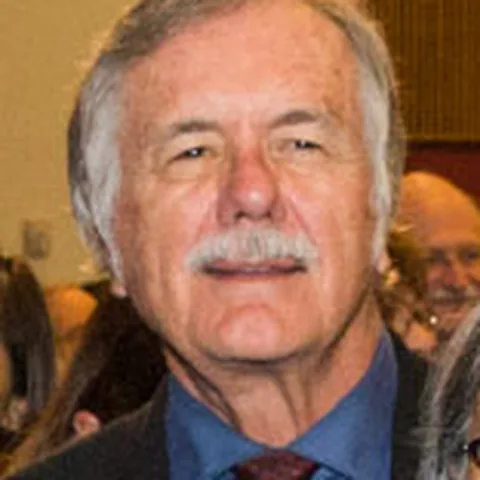
Photo: Dougfairbairn, via Wikimedia Commons. License: CC BY-SA 4.0. Source: commons.wikimedia.org. Cropped to a square and resized. Ask us to remove or replace this photo.
