Philip H. S. Torr
Also known as Philip Torr, Phil Torr, Philip Hilaire Torr, Philip Hilaire Sean Torr
Philip H. S. Torr is an Oxford computer vision researcher whose work spans robust estimation, AI safety and AI for science. After studying pure mathematics at Southampton and completing an Oxford DPhil, he works at Microsoft Research and Oxford Brookes, contributes to Boujou and Sony's Wonderbook, and returns to lead Torr Vision Group. His work includes MLESAC; honours include the Marr prize, the IAPR Fellow award for robust computer vision, fellowships of the Royal Academy of Engineering and Royal Society, and a 2021 Turing AI fellowship; ELLIS lists him as a Fellow.
- Now at
- University of Oxford
- Works
- 729
- Citations
- 70,600
- h-index
- 92
Publication numbers from OpenAlex, as of 14 October 2026.
Timeline
-
1987
Mathematics at Southampton
He earns a first-class degree in pure mathematics from the University of Southampton.
-
1990–1995
A doctorate in computer vision
Torr studies in Oxford's Active Vision Group from 1990 to 1994 and completes a DPhil there in 1995 on outlier detection and motion segmentation.
-
1995–2013
From Microsoft to Oxford
After his DPhil, he stays three years at Oxford as a research fellow, then spends six years at Microsoft Research in Redmond and Cambridge. He becomes a professor of computer vision and machine learning at Oxford Brookes and contributes to Boujou's algorithm design. In 2013, he returns to Oxford as full professor and establishes Torr Vision Group.
-
1998–2000
A prize and a robust estimator
Torr receives the Marr prize in 1998. With Andrew Zisserman, he publishes MLESAC in 2000, a robust estimator that generalizes RANSAC for multiple-view relations from point correspondences.
-
2005–2013
Moving the group to Oxford
The Torr Vision Group forms at Oxford Brookes in 2005 and moves to Oxford in 2013. Torr returns as a full professor and establishes the group there.
-
2012
A book enters augmented reality
With Sony, he plans an Oxford Brookes partnership for Wonderbook's augmented reality, a PlayStation 3 book scheduled for release in 2012. The IAPR names Torr a Fellow for contributions to robust computer vision.
-
2019–2021
Fellowships in engineering and AI
He becomes a Fellow of the Royal Academy of Engineering in 2019 and a Fellow of the Royal Society in 2021. In 2021, he becomes a Turing AI Fellow.
-
As of October 2026
Research on AI safety and science
He is Professor of Engineering Science at Oxford and leads Torr Vision Group. The group works on AI safety and AI for science, and ELLIS lists him as a Fellow at the University of Oxford.
Sources and credits
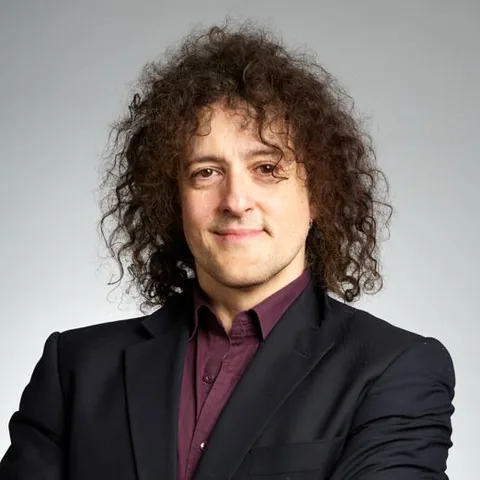
Photo: Kevinssy, via Wikimedia Commons. License: CC BY-SA 4.0. Source: commons.wikimedia.org. Cropped to a square and resized. Ask us to remove or replace this photo.

- Philip Torr - Wikipedia
- Philip Torr - St Catherine's College
- People in the AVG - University of Oxford
- Philip Torr - People - Engineering Science Department
- Visual Geometry Group - University of Oxford
- TVG — Torr Vision Group, University of Oxford
- Sony Wonder Book
- Alphabetical List of IAPR Fellows – International Association for Pattern Recognition
- Philip H. S. Torr | European Laboratory for Learning and Intelligent Systems