Patrick Lewis
Also known as Patrick S H Lewis
Patrick Lewis works on question answering and retrieval-augmented generation, which connects language models with external information. Early research examined factual knowledge in pretrained models and overlap in question-answering benchmarks. RAG, PAQ’s 65 million generated question-answer pairs, and Atlas for few-shot knowledge tasks show the scope of his research. His EACL 2021 Best Short Paper award recognized the benchmark-overlap study, and his UCL PhD focused on neural question answering with retrieval across UCL and FAIR. As of October 2026, he directs Agentic AI at Cohere, leading RAG, tool-use, and agent teams.
Timeline
-
2019
Testing what language models know
With six coauthors, he studies whether pretrained language models hold factual relations and answer open-domain questions.
-
2020
Retrieval joins generation
He coauthors the RAG model, which pairs a sequence-to-sequence language generator with a dense Wikipedia index accessed by a neural retriever. The paper reports state-of-the-art results on three open-domain question-answering tasks.
-
2021
An award for benchmark work
With Pontus Stenetorp and Sebastian Riedel, he studies overlap in open-domain question-answering benchmarks. Their paper receives the EACL 2021 Best Short Paper Award.
-
2021
Questions at scale
His PAQ paper introduces 65 million automatically generated question-answer pairs and RePAQ, a related QA-pair retriever. His 2021 doctoral thesis focuses on neural question answering through retrieval and generation; he completes his PhD while splitting time between FAIR and UCL.
-
2022
Learning from few examples
With Gautier Izacard and eight coauthors, he presents Atlas, a retrieval-augmented model for knowledge-intensive tasks that can learn from very few examples. On Natural Questions, it exceeds 42% accuracy with 64 examples.
-
As of October 2026
Directing agentic AI
He is Director of Agentic AI at Cohere, where he leads RAG, tool-use, and agent teams.
Sources and credits
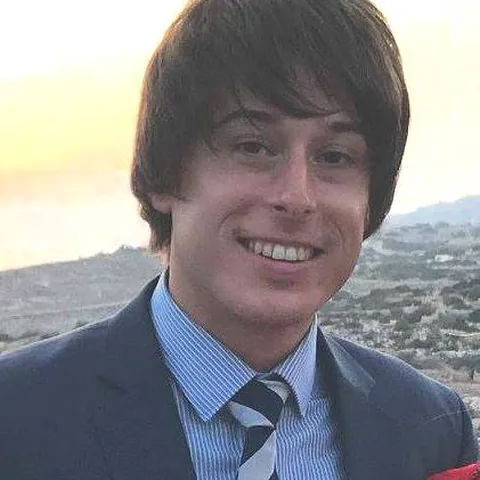
Photo: patricklewis.io; Patrick Lewis; creator not stated. License: Not stated by source. Source: patricklewis.io. Cropped to a square and resized. Ask us to remove or replace this photo.
- Language Models as Knowledge Bases? - ACL Anthology
- Retrieval-Augmented Generation for Knowledge-Intensive NLP Tasks | UCL NLP
- Question and Answer Test-Train Overlap in Open-Domain Question Answering Datasets - ACL Anthology
- Best Paper Awards - EACL 2021
- PAQ: 65 Million Probably-Asked Questions and What You Can Do With Them | UCL NLP
- Patrick Lewis
- Publications | Patrick Lewis
- Atlas: Few-shot Learning with Retrieval Augmented Language Models
- Japanese Symposium on Open LLM 登壇者情報 | 国立情報学研究所 大規模言語モデル研究開発センター
- UCL NLP