Nuno Carvalhais
Nuno Carvalhais develops model-data approaches for Earth-system research. His joint work includes using deep learning to forecast wildfire danger from environmental observations. Carvalhais has led Max Planck’s Model-Data Integration Group since 2012. His group works on ecosystem modeling, data assimilation and hybrid models. Carvalhais coauthored Deep Learning Methods for Daily Wildfire Danger Forecasting with seven other researchers. The original paper compares learned spatial and temporal models with a random-forest baseline using Earth-observation data. Carvalhais leads a group in biogeochemical integration. His group focuses on terrestrial ecosystem dynamics, model-data fusion, vegetation remote sensing and hybrid modeling.
- Now at
- Max Planck Society
Timeline
-
2012
Model-data integration group
Carvalhais has led Max Planck’s Model-Data Integration Group since 2012. His group works on ecosystem modeling, data assimilation and hybrid models.
-
2021
Learning wildfire danger
Carvalhais coauthored Deep Learning Methods for Daily Wildfire Danger Forecasting with seven other researchers. The original paper compares learned spatial and temporal models with a random-forest baseline using Earth-observation data.
-
As of October 2026
Earth-system research
Carvalhais leads a group in biogeochemical integration. His research focuses on terrestrial ecosystem dynamics, model-data fusion, vegetation remote sensing and hybrid modeling.
Sources and credits
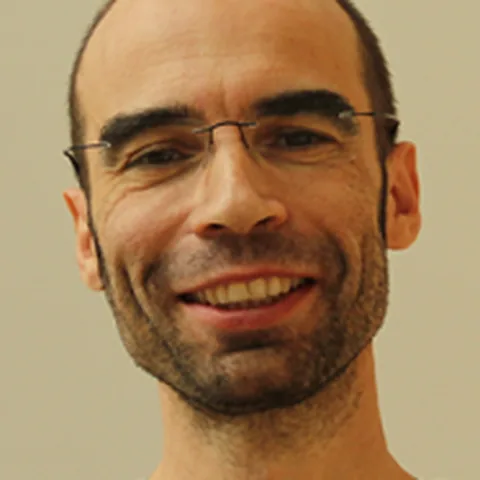
Photo: www.ellis-jena.ai; Nuno Carvalhais profile photograph; creator not stated. License: Not stated by source. Source: ellis-jena.ai. Cropped to a square and resized. Ask us to remove or replace this photo.