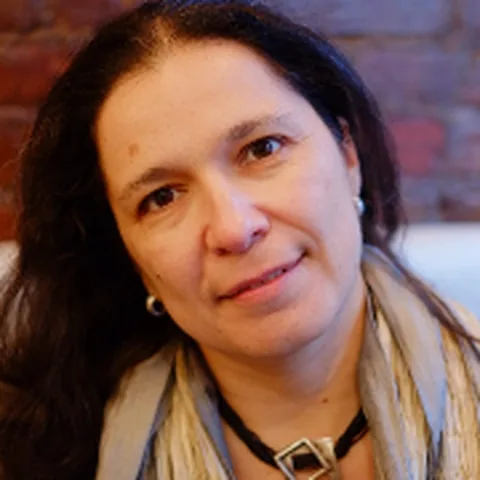
Natasha Noy
Natasha Noy researches structured data, ontologies and dataset discovery. At Stanford’s Protégé group, Noy worked on ontology development, alignment and collaboration. With Deborah McGuinness, she wrote a practical guide to building an ontology from classes, properties and instances. Noy introduced Google Dataset Search in September 2018. Later shared research examined its metadata corpus and used a neural classifier to detect pages that actually describe datasets.
Timeline
-
Stanford research before Google
Building and sharing formal vocabularies
Noy worked in Stanford’s Protégé group on ontology development, alignment and collaborative engineering. With Deborah McGuinness, she wrote Ontology Development 101. The guide explains how to define a domain’s classes and properties, arrange their relations and add instances. It treats development as an iterative process.
-
2018
Introducing Dataset Search
Noy introduced Google Dataset Search on September 5, 2018. It describes a search service that helps people find datasets across repositories. Providers describe datasets using shared metadata standards, including what the data covers, who created it and how it can be downloaded. The service is credited to the Google team.
-
2020
Studying a web-scale metadata corpus
With Omar Benjelloun and Shiyu Chen, Noy published Google Dataset Search by the Numbers. The paper analyzes dataset descriptions expressed in the schema.org vocabulary. It studies their sources, topics and formats, as well as search interests, and identifies gaps in data access. Its corpus describes the web at the time of the study.
-
2021
Checking what dataset markup means
Noy coauthored Dataset or Not? with Alrashed, Paparas, Benjelloun and Sheng. The study found that dataset markup could appear on pages that did not describe datasets. The team developed a deep neural classifier to identify dataset pages and reported 96.7 percent recall at 95 percent precision.
Sources and credits
Photo: research.google; creator not stated. License: Not stated by source. Source: research.google. Cropped to a square and resized. Ask us to remove or replace this photo.