Michael Isard
Also known as Michael Acheson Isard
Michael Isard is a computer vision and systems researcher whose work spans visual tracking, distributed systems, and machine learning infrastructure. He earned a D.Phil. in computer vision from Oxford in 1998 and helped introduce particle filters through Condensation. At Microsoft Research, he worked on distributed systems such as Dryad. He co-authored TensorFlow, received the 2017 Longuet-Higgins Prize for an object retrieval paper, and co-led Gemini 1.0 infrastructure; the Royal Society elected him a Fellow in 2023. As of October 2026, he is a Google DeepMind research scientist who co-leads a team building infrastructure used to train Google's largest machine learning models.
- Now at
- Google DeepMind
- Works
- 135
- Citations
- 49,244
- h-index
- 54
Publication numbers from OpenAlex, as of 14 October 2026.
Timeline
-
1998
Oxford and Condensation
In 1998, Michael Acheson Isard earns a D.Phil. in computer vision from Oxford and develops the Condensation algorithm for visual tracking. His work helps introduce particle filters to computer vision.
-
2002–2007
Microsoft Research and Dryad
In 2002, he works at Microsoft Research Silicon Valley on visual tracking and sequential filtering. In 2007, he co-authors Dryad, a distributed execution engine for data-processing programs that scales to data centers with thousands of computers.
-
2015
TensorFlow goes open source
In November 2015, Google releases the TensorFlow API and reference implementation as open source; Isard co-authors the report describing its large-scale machine learning system.
-
2017
A Longuet-Higgins Prize
In 2017, the Longuet-Higgins Prize goes to the 2007 CVPR paper he co-authors with James Philbin, Ondrej Chum, Josef Sivic, and Andrew Zisserman, “Object Retrieval with Large Vocabularies and Fast Spatial Matching.” The system returns ranked images that contain a query object from a large corpus.
-
2023
Royal Society Fellowship
The Royal Society elects him a Fellow in 2023.
-
2025
Gemini infrastructure co-lead
In 2025, he co-leads infrastructure for Gemini 1.0, Google's multimodal model family.
-
April 2026
Advising on Decoupled DiLoCo
In April 2026, he provides additional support and advice to Google DeepMind's Decoupled DiLoCo work on distributed AI training.
-
As of October 2026
Google DeepMind research scientist
As of October 2026, he is a Research Scientist at Google DeepMind and co-leads a team building infrastructure used to train Google's largest and most capable machine learning models.
Sources and credits
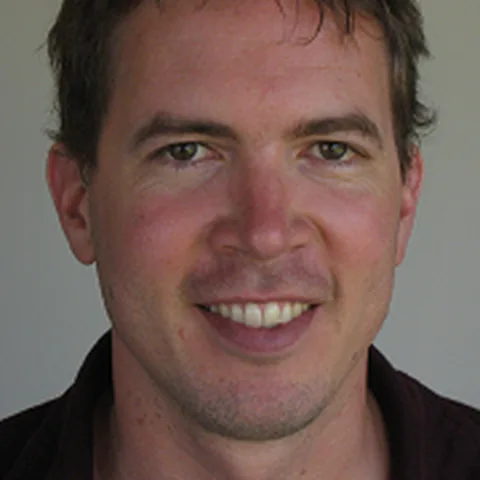
Photo: research.google; Michael Isard; creator not stated. License: Not stated by source. Source: research.google. Cropped to a square and resized. Ask us to remove or replace this photo.
- Michael Acheson Isard | Innovators Under 35
- Faculty Summit 2006 - Microsoft Research
- Dryad: Distributed Data-parallel Programs from Sequential Building Blocks
- TensorFlow: Large-Scale Machine Learning on Heterogeneous Distributed Systems
- Two prizes awarded to Josef Šivic in 2017
- Object Retrieval with Large Vocabularies and Fast Spatial Matching
- Exceptional scientists elected as Fellows of the Royal Society
- Gemini: A Family of Highly Capable Multimodal Models
- Decoupled DiLoCo: Resilient, Distributed AI Training at Scale
- Dr Michael Isard FRS | Royal Society Fellow