Percy Liang
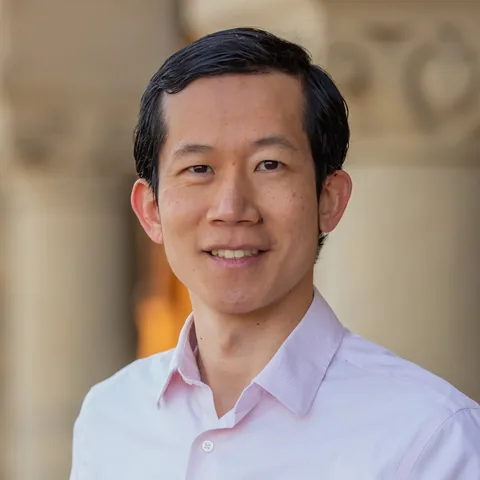
Percy Liang is a Stanford professor whose work connects language models, evaluation, and a public record of how research is done. He studied at MIT, completed a Berkeley doctorate with Michael Jordan and Dan Klein, and worked as a Google postdoctoral researcher. At Stanford, he created CodaLab Worksheets to keep experiments and their origins traceable. He contributed to the broad foundation-models report and coauthored HELM, which examines models across several scenarios and measures. In 2024, Liang and David Hall started Marin at Stanford; its current development credits Open Athena and community contributors. Liang also teaches Language Modeling from Scratch with Tatsunori Hashimoto. His projects give researchers and learners ways to inspect the data, methods, and tests behind a model.
- Now at
- Stanford University
- Works
- 458
Publication numbers from OpenAlex, as of 14 October 2026. Citations and h-index are hidden because this OpenAlex record may be incomplete or mix in other authors.
Timeline
-
2004–2012
Education and research
MIT degrees lead to a Berkeley doctorate in 2011 and a Google postdoctoral role in 2012.
-
Stanford
CodaLab Worksheets
Liang creates tools for managing experiments and tracing results back to code and data.
-
2021
Foundation models
He joins an interdisciplinary team studying broadly trained models and their technical and social effects.
-
2022
HELM
The team evaluates language models across scenarios and multiple measures.
-
From 2024
Marin
Liang and David Hall start an open research project, now developed by Open Athena and community contributors.
-
Spring 2026
Teaching model building
Liang and Tatsunori Hashimoto teach data, model construction, training, and evaluation from scratch.
Sources and credits
Photo: Percy Liang, Stanford personal page. License: Not stated by source. Source: cs.stanford.edu. Cropped to a square and resized. Ask us to remove or replace this photo.