Klaus-Robert Müller
Klaus-Robert Müller is a machine-learning researcher whose work includes support-vector machines, explainable AI, and machine learning for scientific discovery. He earned degrees in mathematical physics and theoretical computer science in Karlsruhe, built the Intelligent Data Analysis group in Berlin, and became a professor at Potsdam and TU Berlin. As of October 2026, he is Professor of Machine Learning at TU Berlin and Director of BIFOLD. He received the 2024 Feynman Prize in Theory, the 2026 Gottfried Wilhelm Leibniz Prize, and the 2026 IEEE Neural Network Pioneer Award.
- Now at
- Technische Universität Berlin, Charité - Universitätsmedizin Berlin and European Laboratory for Learning and Intelligent Systems
- Works
- 706
- Citations
- 78,816
- h-index
- 111
Publication numbers from OpenAlex, as of 14 October 2026.
Timeline
-
1989–1995
Physics and computer science
He earns a diploma in mathematical physics at the University of Karlsruhe in 1989 and a PhD in theoretical computer science there in 1992. He works as a postdoctoral fellow at GMD FIRST in Berlin from 1992 to 1994 and joins the University of Tokyo as a European Community STP research fellow in 1994–1995.
-
1990s–2008
Support-vector machines and IDA
In the 1990s, he and Vladimir Vapnik develop theoretical foundations for support-vector machines. He leads the Intelligent Data Analysis group at GMD FIRST from 1995 to 2008 and holds a joint associate professorship with GMD and the University of Potsdam from 1999. He becomes a full professor at Potsdam in 2003 and chairs machine learning at TU Berlin from 2006.
-
2010–2017
Explainable AI and quantum chemistry
Since 2010, he develops explainable AI methods that make machine-learning processes transparent. During a 2011 sabbatical at the Institute for Pure and Applied Mathematics at the University of California, Los Angeles, he develops the idea of using machine learning to predict outcomes of the Schrödinger equation. He becomes a member of the German National Academy of Sciences Leopoldina in 2012 and joins the Berlin-Brandenburg Academy of Sciences in 2017.
-
Since 2022
Co-leading BIFOLD
He and Volker Markl co-lead BIFOLD from July 2022. The institute conducts fundamental research in machine learning, data management, and their interfaces.
-
2024
A Feynman Prize in Theory
Foresight Institute awards him the 2024 Feynman Prize in Theory.
-
2026
A Leibniz Prize
On March 18, 2026, the German Research Foundation awards him the Gottfried Wilhelm Leibniz Prize for foundational contributions to AI and its applications in the natural sciences.
-
2026
An IEEE Pioneer Award
The IEEE Computational Intelligence Society awards him the 2026 Neural Network Pioneer Award for contributions to kernel-based learning.
-
As of October 2026
Professor and BIFOLD director
He is Professor of Machine Learning at TU Berlin and Director of BIFOLD. His team develops SO3LR, a foundation model for quantum chemistry, and Atlas-2, a foundation model for histopathology. His research uses machine learning and explainable AI to help scientists uncover patterns and formulate new research questions.
Sources and credits
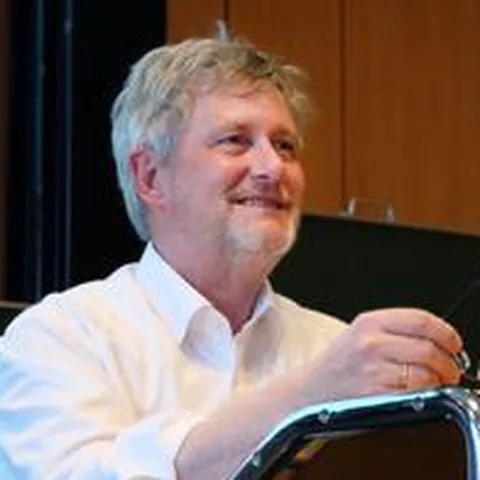
Photo: Tatjana Ruf, via Wikimedia Commons. License: CC BY-SA 2.0. Source: commons.wikimedia.org. Cropped to a square and resized. Ask us to remove or replace this photo.

- Prof. Dr. Klaus-Robert Müller | Machine Learning Group
- Gottfried Wilhelm Leibniz Prize awarded to Klaus-Robert Müller
- Prize Awarded for Achievements in Nanotechnology
- Klaus-Robert Müller honored with the Leibniz Prize
- Pioneer Award for Klaus-Robert Müller
- New Video Portrait: AI in Science: How AI Is Changing the Questions We Ask – Klaus-Robert Müller