Heidy Khlaaf
Computer scientist Heidy Khlaaf brings formal verification and safety engineering into questions about high-risk AI systems. After a UCL doctorate and safety-critical work at Adelard, she worked on OpenAI's Codex risk-assessment effort and coauthored a hazard framework for code-generating models. At Trail of Bits, she helped disclose LeftoverLocals, a GPU vulnerability that could expose interactive LLM responses. At AI Now, she coauthored reports on foundation models in military intelligence and safety standards for military AI. She was named to TIME's 2025 AI list, and as of October 2026 serves as AI Now Institute's Chief AI Scientist.
- Now at
- AI Now Institute
- Works
- 21
Publication numbers from OpenAlex, as of 14 October 2026. Citations and h-index are hidden because this OpenAlex record may be incomplete or mix in other authors.
Timeline
-
2015
Proving software properties
Her work on the first automated algorithm for CTL* verification of infinite-state software systems won a best paper award at CAV 2015.
-
2017–2018
From formal methods to safety
She completed a computer science PhD at University College London in 2017 and also received a BS in computer science and philosophy from Florida State University. By 2018, she was a research consultant at Adelard LLP, evaluating safety-critical systems and helping develop related safety and security standards.
-
2020–2021
Assessing a code assistant
From late 2020 to mid-2021, she served as a senior systems safety engineer at OpenAI while it developed safety and risk assessment frameworks for the Codex coding tool.
-
2022
A hazard analysis for code
Khlaaf coauthored OpenAI's “A Hazard Analysis Framework for Code Synthesis Large Language Models.” The paper outlines a framework to identify technical, social, political, and economic hazards from models such as Codex.
-
January 2024
Finding a GPU memory leak
She and Tyler Sorensen disclosed LeftoverLocals, a GPU local-memory vulnerability that could let a co-resident process recover data from another process, including an interactive LLM response.
-
October 2024
Tracing military AI risks
With Sarah Myers West and Meredith Whittaker, she coauthored “Mind the Gap,” a paper on national-security risks from foundation models used in military contexts. It urges more attention to systems used for military intelligence, surveillance, targeting, and reconnaissance.
-
2025
Restoring military AI safeguards
She coauthored “Safety Co-Option and Compromised National Security,” which argues that weakened AI risk thresholds can erode long-standing safety protocols. The report calls for democratic oversight and rigorous standards for military AI. In 2025, TIME named her to its 100 Most Influential People in AI list.
-
As of October 2026
A public voice on AI risk
She is Chief AI Scientist at the AI Now Institute. Her work includes evaluating, specifying, and verifying complex or autonomous software in safety-critical systems.
Sources and credits
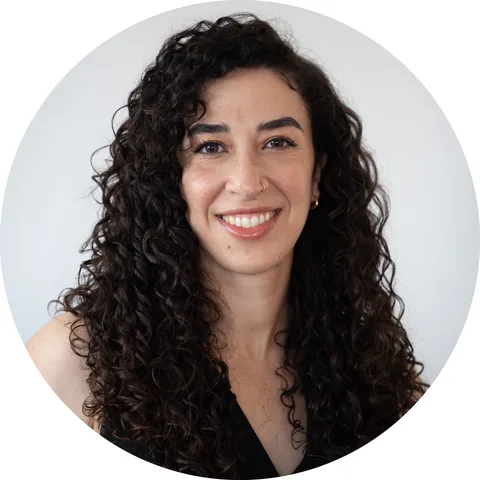
Photo: heidyk.com; Dr Heidy Khlaaf; creator not stated. License: Not stated by source. Source: heidyk.com. Cropped to a square and resized. Ask us to remove or replace this photo.
- Dr Heidy Khlaaf MBCS
- Women in AI: Heidy Khlaaf, safety engineering director at Trail of Bits
- PWLConf 2018 | Heidy Khlaaf
- How AI safety took a backseat to military money
- A Hazard Analysis Framework for Code Synthesis Large Language Models
- LeftoverLocals: Listening to LLM responses through leaked GPU local memory
- [2410.14831] Mind the Gap: Foundation Models and the Covert Proliferation of Military Intelligence, Surveillance, and Targeting
- New Report on the National Security Risks from Weakened AI Safety Frameworks
- Heidy Khlaaf, Author at AI Now Institute