Dong Yu
Also known as 俞栋
Dong Yu is a researcher in speech AI whose work combines deep learning with automatic speech recognition. His graduate studies span pattern recognition and computer science in China and the United States, followed by a Microsoft Research career that began in 1998. He coauthored a deep-neural acoustic modeling overview and the CNTK toolkit report, then helped build a conversational speech system that matched professional transcribers. Tencent appointed him to lead its Seattle AI Lab in 2017; ISCA and ACM later named him a Fellow, and IEEE SPS selected him for a technical achievement award. As of October 2026, he is vice president of AI Foundations at Capital One and chief scientific advisor to Transsion.
Timeline
-
1996
Graduate training for speech AI
His graduate training spans pattern recognition and intelligent control at the Chinese Academy of Sciences, computer science at Indiana University, and computer science at the University of Idaho. He earns his Indiana computer science master's in 1996.
-
1998
Starting at Microsoft Research
His Microsoft Research career begins in 1998, and he later serves as a principal researcher.
-
2012–2014
Deep networks and a toolkit
In a 2012 overview, he and his coauthors describe deep neural acoustic models that outperform Gaussian mixture models across speech recognition benchmarks. A 2014 report he coauthors introduces CNTK, a computational-network toolkit with examples for acoustic models, language models, and spoken-language understanding.
-
2016
Matching professional transcribers
He coauthors a Microsoft conversational speech system that matches professional transcribers on Switchboard telephone speech. The system uses convolutional and LSTM acoustic models.
-
2017
Opening a Seattle AI lab
Tencent appoints him deputy director of its AI Lab and assigns him to oversee the new Seattle lab. His remit includes speech recognition and natural language processing research.
-
2021–2026
Fellowships and technical honors
ISCA names him a 2021 Fellow for deep-learning-based automatic speech recognition, and ACM names him a 2022 Fellow for speech processing and deep-learning applications. IEEE SPS selects him for its 2025 Claude Shannon–Harry Nyquist Technical Achievement Award for contributions to deep learning in speech recognition and processing.
-
As of October 2026
AI foundations in a new role
He serves as vice president of AI Foundations at Capital One and chief scientific advisor to Transsion.
Sources and credits
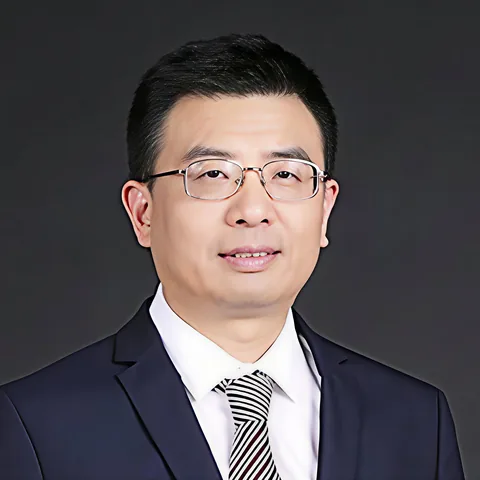
Photo: dongyu888.github.io; Dong Yu (俞栋); creator not stated. License: Not stated by source. Source: dongyu888.github.io. Cropped to a square and resized. Ask us to remove or replace this photo.
- Dong Yu (俞栋)
- Alumni Awards: Alumni & Giving: Luddy School of Informatics, Computing, and Engineering: Indiana University Bloomington
- Deep Neural Networks for Acoustic Modeling in Speech Recognition
- An Introduction to Computational Networks and the Computational Network Toolkit
- Achieving Human Parity in Conversational Speech Recognition
- Tencent Appoints Dr. Yu Dong as AI Lab Deputy Director and Opens New AI Lab in Seattle
- ISCA Services: 2021 ISCA Fellows Announced
- GLOBAL COMPUTING ASSOCIATION NAMES 57 FELLOWS FOR OUTSTANDING CONTRIBUTIONS THAT PROPEL TECHNOLOGY TODAY
- 2025 IEEE Signal Processing Society Awards Winners | IEEE Signal Processing Society