Brian C. Williams
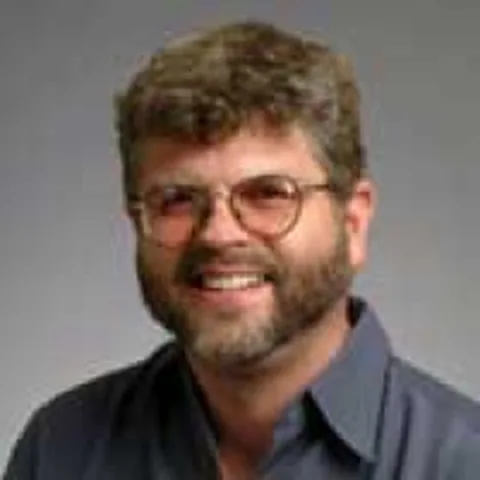
Brian C. Williams studies model-based autonomy, diagnosis and risk-aware decision making. He worked on fault-diagnosis systems at Xerox PARC in the 1980s and earned his doctorate in 1989. At NASA Ames he helped develop Remote Agent and served on the Deep Space One flight team for its 1999 demonstration. AAAI elected him a Fellow in 2008. His later MIT research includes collaborative robots and risk-bounded programming.
- Works
- 75
Publication numbers from OpenAlex, as of 14 October 2026. Citations and h-index are hidden because this OpenAlex record may be incomplete or mix in other authors.
Timeline
-
1980s
Reasoning about system faults
Williams worked on multi-fault diagnosis through the GDE and Sherlock systems at Xerox PARC. These systems were shared research on reasoning from models of a device’s behavior.
-
1989–1990s
From doctoral work to autonomy
Williams earned his doctorate in 1989. His later work on the Livingstone and Burton systems developed model-based execution and autonomy. At NASA Ames he formed an autonomous-systems research group and helped develop Remote Agent, linking reasoning with the control of an operating system.
-
1999
Remote Agent in space
Williams co-invented Remote Agent and served on the Deep Space One flight team. Remote Agent had a flight demonstration in 1999, and a NASA Space Act Award was given that year. Remote Agent was a team effort; Williams contributed to its autonomous-control research.
-
2008 and later
Risk and collaborative robotics
AAAI elected Williams a Fellow in 2008 for model-based reasoning, autonomy and space applications. He also researches collaborative robots and risk-bounded programming, where probabilistic reasoning and explicit risk limits guide decisions.
Sources and credits
Photo: www.csail.mit.edu; creator not stated. License: Not stated by source. Source: csail.mit.edu. Cropped to a square and resized. Ask us to remove or replace this photo.