Alison Noble
Alison Noble works at the intersection of AI, computer vision, and medicine. Her PULSE project studied how ultrasound video, eye tracking, and probe movement could model an expert sonographer’s visual search and navigation. PULSE, an Oxford project, ran from 2016 to 2022. She received a 2023 Turing AI fellowship for human-AI collaboration and federated learning in global healthcare imaging. She chaired the group behind the Royal Society’s 2024 Science and AI report.
Timeline
-
2016
Learning from sonographers
Noble led PULSE, a project funded through the ERC Advanced Grant scheme. PULSE, an Oxford project, ran from 2016 to 2022. Its aim was to develop AI methods that learn from the perceptual cues used by expert ultrasound operators.
-
2016–2022
Images, gaze, and probe movement
PULSE combined ultrasound scanning videos with eye tracking and probe movement data. The project studied computational models of visual search and navigation. These models aimed to describe how a sonographer uses several cues during a diagnostic scan and to support image interpretation.
-
2023
Human-AI collaboration in imaging
Noble, a professor at Oxford, received a Turing AI World-Leading Researcher Fellowship in 2023. Her work focuses on human-AI collaboration and federated learning for global healthcare imaging partnerships.
-
2024
Science and AI policy
Noble chaired the working group for the Royal Society’s 2024 Science and AI report. Her research interests also include AI-assistive ultrasound, multimodal imaging, and human-AI collaboration.
Sources and credits
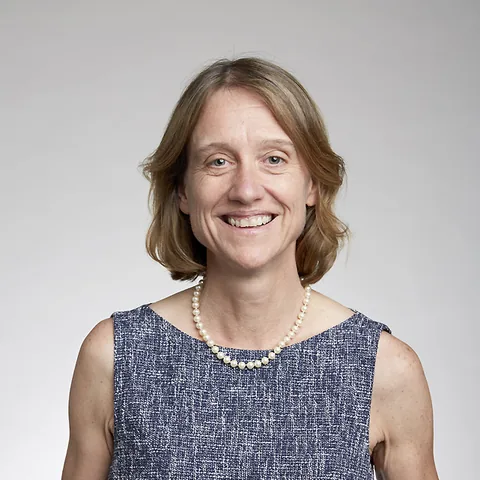
Photo: Duncan.Hull, via Wikimedia Commons. License: CC BY-SA 4.0. Source: commons.wikimedia.org. Cropped to a square and resized. Ask us to remove or replace this photo.
